

It is very likely that you have ever heard or read something about the decentrable objectives or about the Tilt-Shift Lens and have been left in doubt as to what they are for. They are not objectives that are frequently seen, which does not help their popularity,
so today we are going to dedicate an article so that you know them and you can know if they are or not for you
These objectives have a clear use, they are designed for architectural photography. Now, does that mean that whoever does not devote himself to architecture cannot benefit from them?
Of course not, they have other uses that we will see throughout this entry. What is clear is that whoever is serious about this type of photography clearly needs one.
Also read : What is Spherical Aberration
What is Title Shift Lens
Table of Contents
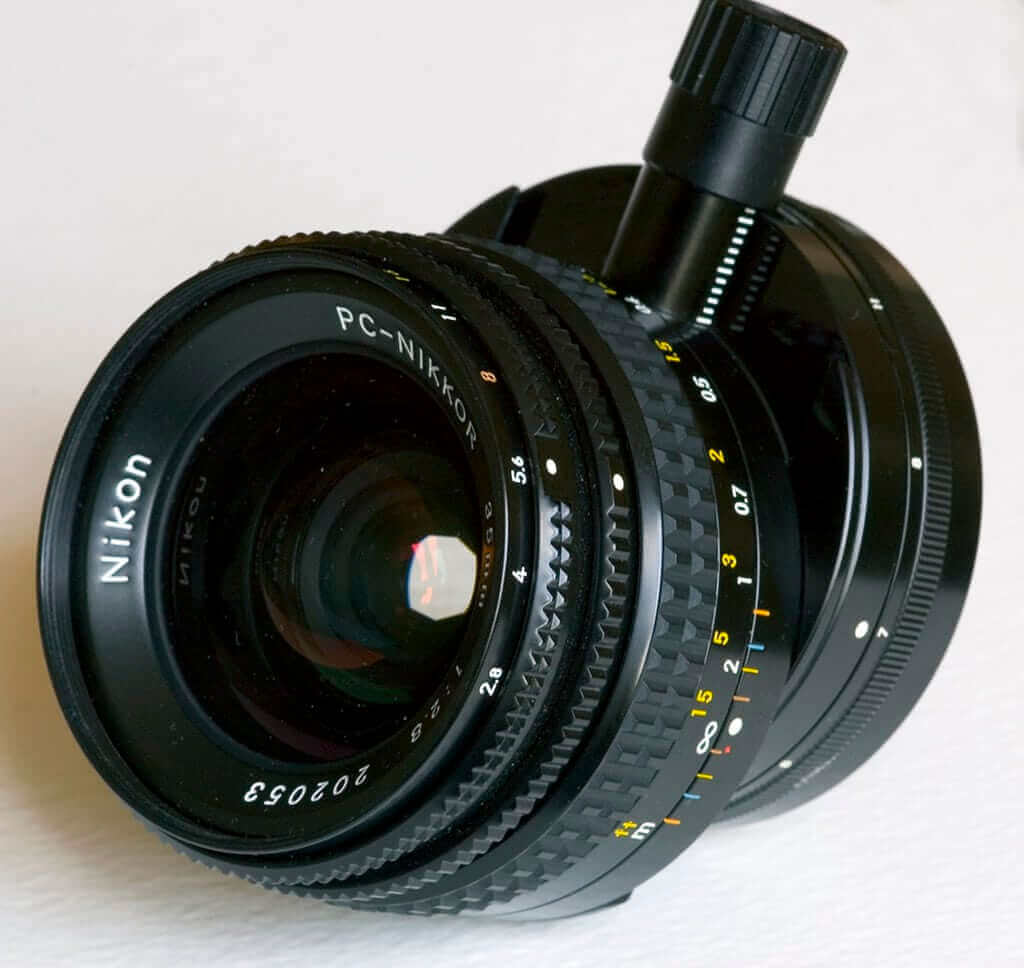
A tilt shift lens is a lens that can correct the depth of field and vertical lines. By adjusting the tilt (tilt) mechanism, you can make sure that the whole subject or only a specific part of the subject remains sharp. The shift mechanism allows you to remove distorted vertical lines.
This distortion is caused by the angle from which it is photographed and occurs mainly in wide-angle lenses. Using the shift mechanism, you can change the way the image falls on the sensor so that the vertical line is really vertical.
Also read: What is a Single Lens Reflex Camera
How do Title Shift Lense Work?
If you have ever read anything about these objectives, you may read or understand that they correct the perspectives. Yes and no. If we talk about the result yes, if we talk about the process, no.
I explain. When you photograph a building that is too large or too close and from below, the position from which you shoot is not perpendicular to it, so in the end, the lines tend to converge.
If you manage to place the camera in a position completely perpendicular to the construction, it does not matter the objective with which you take the photo, the lines can be completely straight. What happens is that this is very difficult in most cases, because of the size of the building because of the space you have to move away, because of the focal length of your objective, and so on.
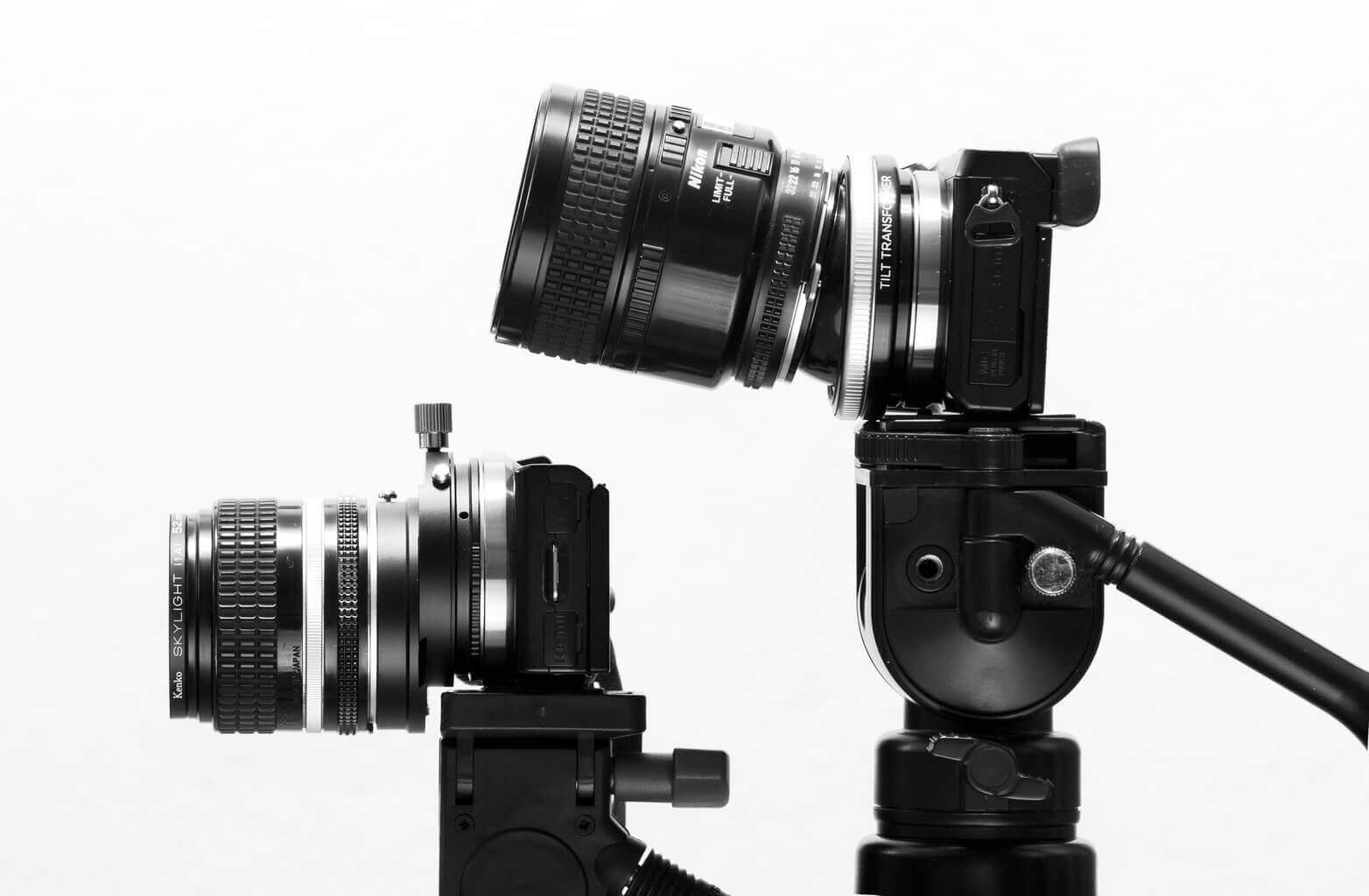
What these objectives do is change the focus plane to avoid perspective deviations. Scrolling up or down can change the view without having to tilt the camera.
Decentrable objectives allow vertical movements and horizontal movements with respect to the optical axis. The lateral displacements allow to achieve panoramically and the fact of making a movement not parallel to the sensor allows a blur in different planes of the image achieving that visual effect of miniature or model. Let’s see both carefully.
Also read: Best Cameras For Landscape Photography
Shift Movement
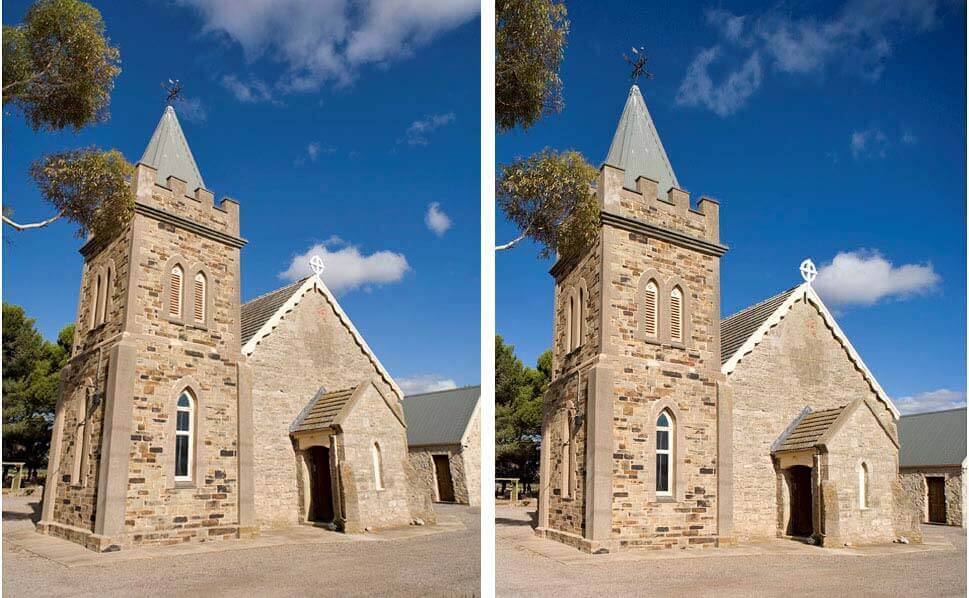
The shift is a displacement of the lens (vertical and horizontal) parallel to the focal plane that allows different shots to be taken without moving the camera. In this way, you can create panoramas that join in post-production without the problem of lines and without the need to correct any perspective.
Not only is it useful for panoramas, as you have seen in the comparison of the photo above, moving the lens up allows you to capture straight lines, without distortion.
Tilt Movement
The Tilt or tilting movement is an inclined movement not parallel to the sensor. It does not affect the depth of field but it does allow to fix the focus area at a specific point. To understand this we would have to explain the so-called Scheimp-flug Principle, but the idea is to make it easier for you not to complicate it, so we will not go into these more technical details (you can expand if you want the information on the network).
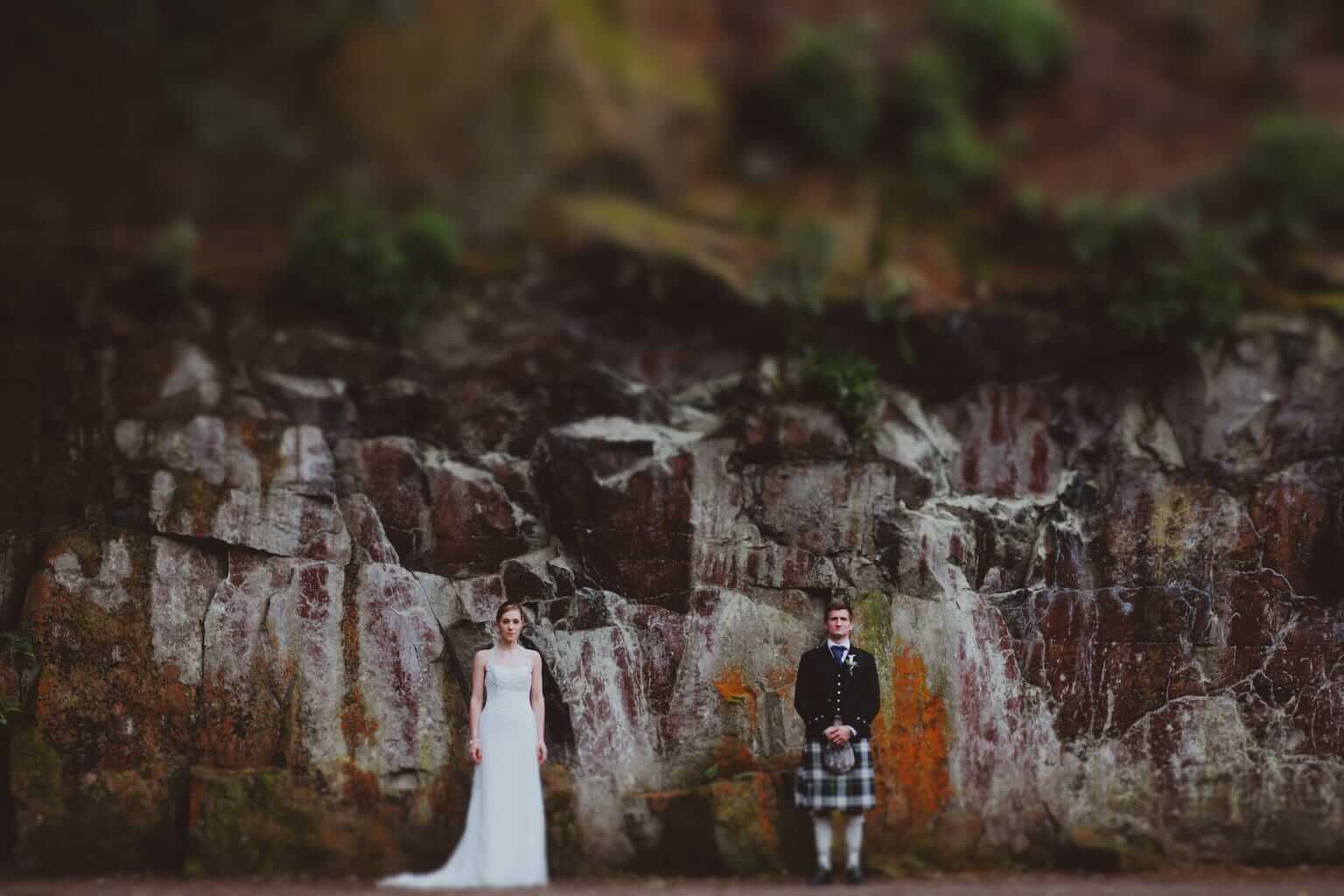
The important thing is that you know that this movement allows you to achieve photographs with a mock-up effect or thumbnails. I leave you a very interesting video of this effect:

Applications
Well as I told you, it is ideal for architecture but not only used in these cases.

Here are other uses:
Panoramic: I have already advanced it, but the panoramic not only stick to architecture ?. If you are passionate about panoramic, horizontal, vertical, city or nature, this objective is waiting for you. In addition, with this objective, you can achieve higher resolution panoramas with the consequent possibility of making large magnifications.

Landscapes:
Your urban landscapes will gain an impact with one of these objectives, although they are also widely used in natural landscapes, and even nature photography. Panoramic, blur, and perspective are the three keys that come together to be a desirable objective in this type of photography.
Weddings:
yes, yes, you read correctly. Maybe you wonder what this objective will have to do with weddings, but wedding photography is not what it used to be, it has taken a giant step (luckily) and is now much more creative. With this objective, the most interesting effects can be achieved, for example, to achieve unfocused parts of the image and not only as achieved with a depth of field, but a more artistic approach, a blur by bands or uneven. Do not lose sight of this objective to give a different touch to a really special day for its protagonists. Leave technical perfection aside and allow feelings to be the protagonists. Here are two examples:

Interiors:
Architecture photography not only focuses on the exterior. Interiors and decorations also benefit from decentrable objectives. If you dedicate yourself to photographing indoors, you work for a real estate agency or a decoration company, this objective should be part of your photographic equipment.

Mockup effect:
we have also talked about it. You can achieve that effect that has become so fashionable of miniatures or models with these objectives. That there are programs that mimic it, yes, but if you want something more professional, the result is completely different.
Also read : How To Take Low Light Photos

Other uses: the imagination has no limit, surely with a objective of this type in your hands you find many more uses, but I will give you another one in which you had not thought. Especially when you take pictures indoors, many times you can’t avoid your reflection in a mirror, right? Well this is something that you could avoid with this objective?
And if you’ve been wanting more, don’t miss this gallery article with Tilt-shift images to fill you with inspiration.
Why is a decentrable objective being able to achieve it in photoshop?
Normally you get to ask yourself this question. And the answer will depend mainly on the use that you are going to give it. It is not the same as you want to “fool” with these effects, take a panoramic photo one day because it gives you the kick or plays for a while.
If it is for that, obviously you are not worth buying a target of this price. Now, if it is to take it seriously, Photoshop will not give you the same results even from a distance. The program will have to fill gaps when correcting perspectives, you will have to work the perspective deviations when joining different images for panoramas, the blur will not have the same effect nor from afar and you will not get photos with a resolution like the one you can achieve directly with a decentrable in panoramic, for example.
Also read: 5 Reasons to go to school to learn photography
TILT & SHIFT LENSES
Tilt & shift lenses (also called decentrable lenses or perspective control lenses) are essential tools for photographers who demand absolute control over composition, focus plane, and distortion.
Whether you are shooting architectural facades, real estate interiors, product photography, or dramatic landscape scenes, these lenses allow you to correct converging vertical lines, control depth of field creatively, and achieve ultra-sharp results from edge to edge.
Unlike standard wide-angle lenses, tilt-shift lenses let you tilt the focal plane (Scheimpflug principle) and shift the lens to eliminate keystone distortion—making them a favorite among professional architectural photographers and visual artists.
For Canon
Canon tilt & shift lenses, widely known as TS-E lenses, are engineered for photographers who require precise perspective correction and advanced depth-of-field control. These decentrable lenses are ideal for architectural photography, interior shoots, real estate listings, and high-end product photography where straight lines and distortion control are critical.
With independent tilt and shift movements, ultra-sharp optics, and robust L-series build quality, Canon TS-E lenses help eliminate converging verticals while maintaining edge-to-edge clarity. They are especially popular among professional architects and commercial photographers who demand technical accuracy and creative flexibility in every frame.
For Nikon
Nikon’s Perspective Control (PC-E) lenses offer exceptional tilt-shift performance for photographers seeking advanced composition control. Designed for architectural, landscape, and studio photography, Nikon PC-E lenses allow you to correct keystone distortion, manage the focal plane using tilt movements, and capture ultra-detailed images with minimal chromatic aberration.
Their precision engineering and Nano Crystal coatings enhance contrast and color accuracy, making them a reliable choice for professionals working in real estate photography, commercial projects, and fine art imagery. Nikon tilt & shift lenses deliver sharpness, perspective accuracy, and superior optical performance.
Also read: Why should we shoot in RAW format?
For Pentax
Pentax tilt and shift lens options cater to photographers who value creative control and distortion management in architectural and product photography. Known for solid construction and dependable optical quality, Pentax shift lenses enable precise perspective correction and improved framing flexibility, particularly in urban and interior photography. These lenses are suitable for capturing buildings, industrial structures, and commercial spaces without unwanted distortion. For photographers using Pentax DSLR systems, decentrable lenses provide enhanced compositional accuracy, improved depth-of-field manipulation, and professional-grade image results.
As you will see, it is not an economic objective that you can buy just to play for a while, or as the first objective to take another step after squeezing the kit. It is an objective for a very specific, interesting, yes, but very specific use.
I have presented them to you, I have told you what they are for and I have told you about other somewhat less well-known utilities, it is now up to you to decide if it enters your interests in the short, medium or long term or if it is something without which you can survive ;).
I hope at least I have clarified doubts. If so, you can help others clarify theirs by sharing this article. Thanks for reading here, until next time!
Also read: Types of Photography: A Complete List of Photographic Genres
Conclusion:
A tilt shift lens is more than just a specialty lens—it is a precision tool designed for photographers who demand full control over perspective, focus plane, and distortion correction. By allowing independent tilt and shift movements, it solves common problems like converging vertical lines in architectural photography and limited depth of field in product or landscape shots. Instead of relying on digital correction in post-processing, tilt shift lenses provide optical accuracy directly in-camera, resulting in sharper images and more natural proportions.
Understanding how a tilt shift lens works—through tilt adjustments based on the Scheimpflug principle and shift movements for perspective control—opens up powerful creative and technical possibilities. Whether you’re capturing skyscrapers, real estate interiors, cityscapes, or experimenting with the miniature effect, this lens category offers unmatched compositional flexibility.
In 2026, as visual standards continue to rise across architecture, commercial photography, and content creation, mastering tilt shift photography can significantly elevate your portfolio. If precision, professional image quality, and creative control matter to you, a tilt shift lens is a smart long-term investment.

![How To Use a Polarizing Filter in 2026 [Comprehensive Guide]](https://cheapcameravlogging.com/wp-content/uploads/2019/10/How-to-use-polarizing-filters-1-768x341.jpg)
